
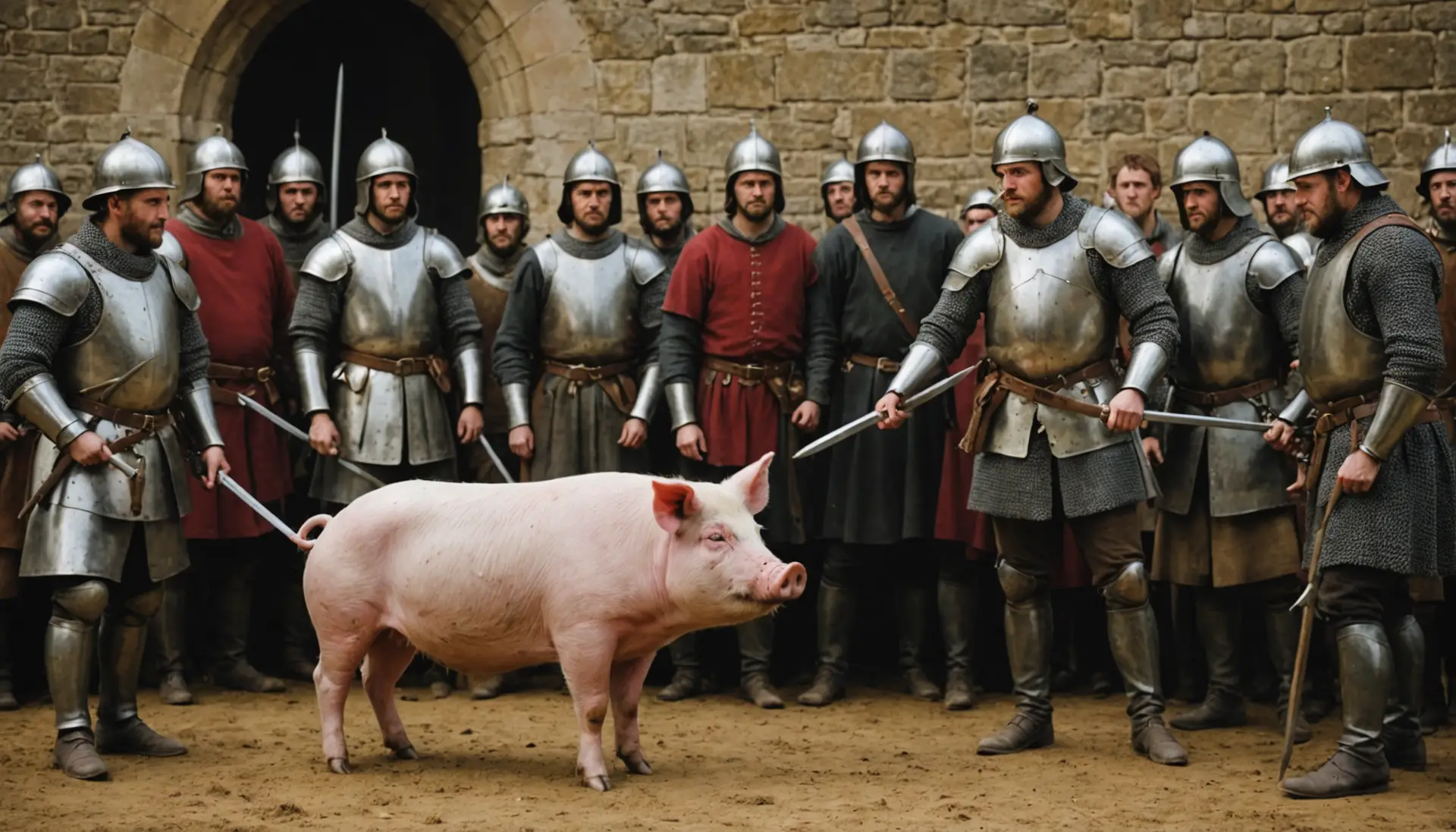
In the dim light of a medieval courtroom, the air thick with the scent of damp stone and the faintest hint of burning tallow, a pig stood accused. The creature, a stout and unassuming animal, was charged with the heinous crime of murder. The townsfolk gathered, their faces a mixture of curiosity and disbelief, as they watched this peculiar spectacle unfold. It was a scene that would echo through history, a moment that encapsulated the bizarre intersection of law, morality, and the animal kingdom in an age when the boundaries between human and beast were often blurred. This was not an isolated incident; rather, it was part of a larger phenomenon known as animal trials, where creatures were subjected to the same legal scrutiny as their human counterparts.
Medieval animal trials were not merely oddities; they were a reflection of the societal norms and beliefs of the time. In an era steeped in superstition and religious fervor, animals were often seen as extensions of human behavior, capable of moral agency. The idea that a pig could be held accountable for its actions was not as far-fetched as it might seem to modern sensibilities. The medieval worldview was one where the divine order permeated every aspect of life, and animals were believed to possess souls that could be judged. This belief system laid the groundwork for a series of trials that would see everything from rats to horses brought before judges, often with grave consequences.
The infamous case of the pig that was executed took place in 1386 in the small French town of Falaise. The pig, known as “the Pig of Falaise,” had allegedly attacked and killed a young child. The details surrounding the incident remain murky, lost to the passage of time, but what is clear is that the community was horrified. The townspeople demanded justice, and in their eyes, the only fitting punishment for such a crime was death. The trial itself was a spectacle, drawing crowds eager to witness the proceedings. The pig was dressed in human clothing, a mockery of its nature that underscored the absurdity of the situation. It was led into the courtroom on a leash, its fate hanging in the balance as it faced a panel of judges who would determine its guilt or innocence.
As the trial unfolded, witnesses were called to testify against the pig. They recounted tales of its alleged aggression and wild behavior, painting a picture of a creature possessed by some malevolent spirit. The defense, if one could call it that, was scant. The pig’s owner attempted to argue that it had been provoked, but such pleas fell on deaf ears. The judges deliberated, their decision seemingly predetermined by the weight of public opinion. In a chilling conclusion, the pig was found guilty and sentenced to death by hanging. The execution was carried out with grim efficiency, and the townsfolk watched as the creature met its end, a macabre reminder of the lengths to which society would go to impose order.
The curious world of medieval animal trials reveals much about the legal landscape of the time. These trials were not isolated incidents but part of a broader system where animals were frequently brought to justice for various offenses. From cattle accused of trampling crops to dogs charged with biting humans, animals found themselves entangled in legal disputes that mirrored human conflicts. The trials often followed established legal procedures, complete with judges, witnesses, and even defense attorneys. This adherence to legal formality suggests that medieval society grappled with complex questions about responsibility and culpability.
The role of animals in medieval law extended beyond mere trials; they were also seen as participants in a moral universe governed by divine principles. Animals were often viewed through a lens of anthropomorphism, where their actions were interpreted as reflections of human behavior. This perspective allowed for a unique legal framework where animals could be held accountable for their actions in ways that seem absurd today. The belief that animals could possess intent or malice led to a series of bizarre legal precedents that would shape how society viewed both animals and justice.
The strange and bizarre laws of the medieval era contributed to this phenomenon. In some regions, it was illegal for animals to cause harm to humans or property; thus, when such incidents occurred, trials became necessary to uphold societal norms. In 1474, for instance, a rooster was tried for laying an egg that was believed to be a sign of witchcraft. Such cases highlight not only the absurdity but also the deep-seated fears that permeated medieval life. The law sought to maintain order in a world rife with superstition and uncertainty, and animals became unwitting participants in this quest for control.
Legal precedents set by these trials had lasting implications for how society viewed justice and accountability. While many modern legal systems have moved away from holding animals accountable in such overt ways, the echoes of these trials can still be felt today. The concept of animal rights has evolved significantly since medieval times, yet questions about responsibility and agency remain relevant. The trials served as early examples of how societies grappled with complex moral dilemmas—issues that continue to resonate in contemporary discussions about animal welfare and ethics.
Public perception of animal trials varied widely across regions and cultures. In some communities, these trials were seen as necessary measures to uphold justice; in others, they were viewed as spectacles of absurdity. The townsfolk who gathered to witness these events often did so out of a sense of curiosity or entertainment rather than genuine concern for justice. The execution of the Pig of Falaise became a cautionary tale—a grim reminder that even the most innocent among them could fall victim to societal fears and prejudices.
The impact of medieval animal trials on modern law is subtle yet profound. While contemporary legal systems no longer prosecute animals in such overt ways, the underlying principles of accountability and responsibility remain relevant. Discussions surrounding animal rights have gained traction in recent decades, reflecting an evolving understanding of our relationship with non-human beings. The legacy of these trials serves as a reminder that our perceptions of justice are shaped by historical contexts—contexts that often reveal more about human nature than about the animals themselves.
As society reflects on the ethics and morality of putting animals on trial, questions arise about our treatment of non-human beings today. The absurdity of medieval animal trials prompts us to consider how far we have come—and how far we still have to go—in our understanding of justice and compassion. While we may no longer dress pigs in human clothing or subject them to public executions, we continue to grapple with complex moral questions surrounding animal welfare and rights.
The legacy of the Pig That Was Executed lingers in the collective memory—a haunting reminder of an era when justice took on bizarre forms. It serves as an emblematic case study within the broader tapestry of medieval animal trials, encapsulating both the absurdity and gravity of those moments when society sought to impose order on an unpredictable world. As we reflect on these strange events from centuries past, we are left with an unsettling sense that perhaps some questions about morality and justice remain unanswered—echoing through time like whispers from a forgotten courtroom.
In conclusion, medieval animal trials stand as peculiar artifacts from a time when humanity’s understanding of law and morality was still taking shape. They reveal not only the absurdities inherent in those proceedings but also the deep-seated fears and beliefs that drove societies to seek order through such means. As we navigate our own complex relationship with animals today, it is worth remembering that history is often stranger than fiction—and that our past continues to inform our present in ways we may not fully comprehend.