
The chill of a New England winter hung heavy in the air, a biting wind sweeping through the skeletal trees, their branches clawing at the slate-gray sky. It was the late 19th century, a time when the specter of death loomed large over the small towns scattered across Rhode Island and Massachusetts. In this bleak landscape, whispers of the supernatural began to intertwine with the very real suffering caused by a relentless disease. The townsfolk, gripped by fear and desperation, turned to ancient beliefs, seeking answers in the shadows. They believed that the dead could rise again, that the very soil beneath their feet could harbor malevolent spirits. This was the genesis of the New England vampire panic, a phenomenon that would haunt the region for decades, leaving behind a legacy of fear and superstition.
The roots of this panic can be traced back to a confluence of historical and cultural factors. The 19th century was a time of great upheaval in America, marked by rapid industrialization and urbanization. As people moved from rural areas to burgeoning cities, they carried with them not only their belongings but also their beliefs and fears. The specter of tuberculosis, known then as consumption, loomed large, claiming lives indiscriminately and leaving families shattered in its wake. The disease was poorly understood, its symptoms—coughing, fever, and pallor—often mistaken for signs of something more sinister. In this atmosphere of uncertainty, the old folklore of vampires resurfaced, offering a grotesque explanation for the suffering that surrounded them.
Among the many stories that emerged from this dark period, none is as haunting as that of Mercy Brown. A young woman from Exeter, Rhode Island, Mercy became an emblem of the vampire panic, her tale woven into the fabric of local lore. She was just 19 when she succumbed to tuberculosis in 1892, her family already ravaged by the disease. Her mother had died years earlier, and her brother Edwin was also afflicted, lingering in a state of decline. As Mercy’s health deteriorated, so too did the community’s grip on reality. When she passed away, her family was not merely grieving; they were desperate for answers. The townsfolk began to murmur that Mercy’s spirit might be responsible for Edwin’s worsening condition. In their minds, she had become a vampire.
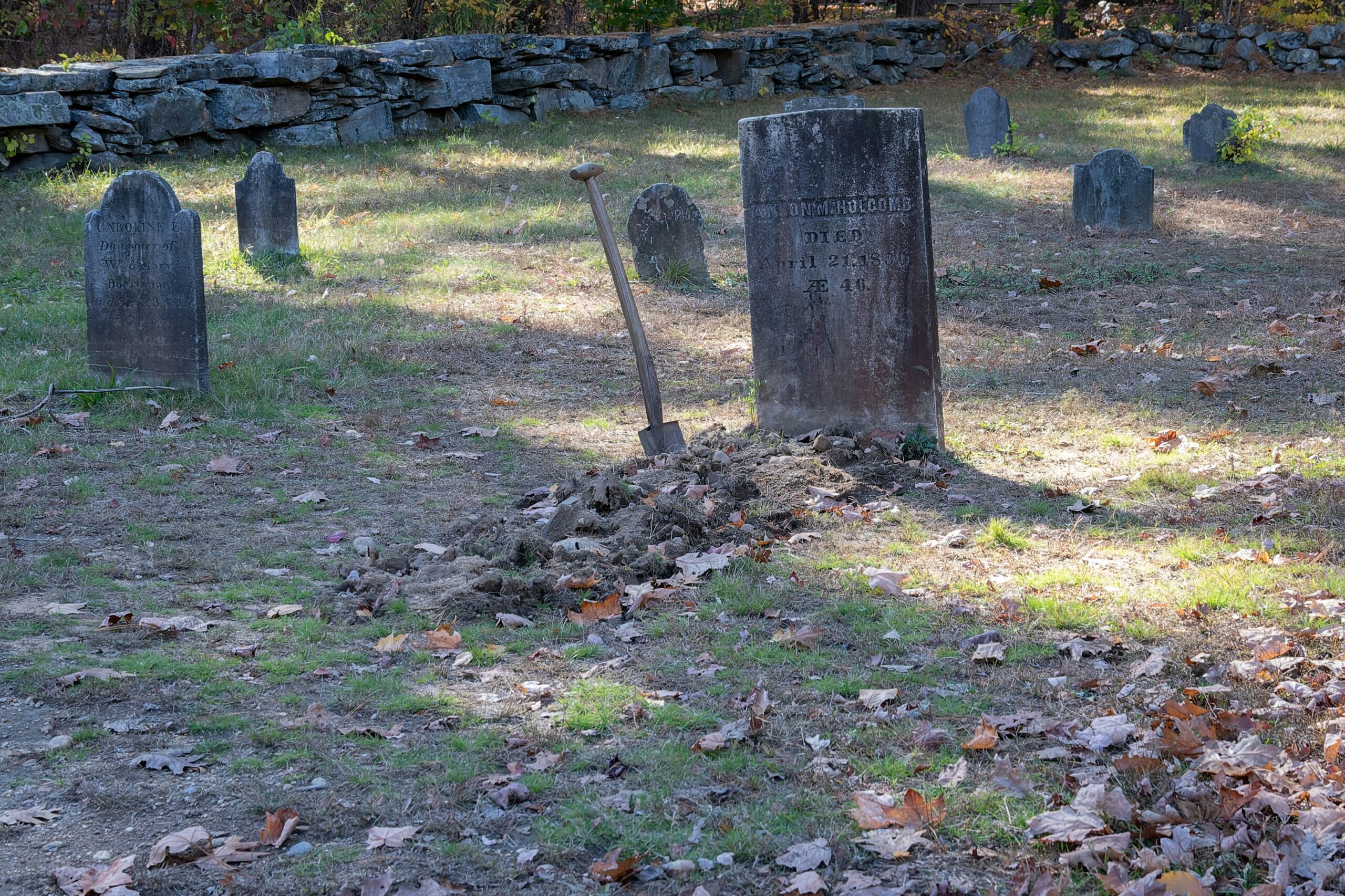
The exhumation of Mercy Brown’s body in March 1892 was a macabre spectacle that would cement her place in history. The ground was still frozen from winter’s grasp as townspeople gathered to witness the grim ritual. They dug through the earth with trembling hands, driven by a mix of fear and hope. When they finally unearthed her coffin, they found her body remarkably well-preserved—an unsettling sight that fueled their suspicions. Her heart was removed and burned in an attempt to free Edwin from his illness. This gruesome act was not born from malice but rather from a profound misunderstanding of death and disease. The community believed they were taking action against an unseen enemy, one that had already claimed too many lives.
The connection between tuberculosis and vampirism is rooted in the very nature of the disease itself. Tuberculosis often manifested with symptoms that mirrored those attributed to vampires: pallor, weakness, and a persistent cough that could draw blood. The slow decline of its victims created an eerie resemblance to the folklore surrounding bloodsuckers who drained life from their prey. In a time when medical knowledge was limited and superstition reigned supreme, it was all too easy for communities to conflate these two realities. The idea that a deceased loved one could return to harm the living provided a twisted sense of agency in an otherwise helpless situation.
As communities grappled with their fears, folklore and superstition played an undeniable role in shaping their actions. Tales of vampires had long been part of New England’s cultural tapestry, passed down through generations like heirlooms. These stories were not mere entertainment; they were cautionary tales that reflected societal anxieties about death and disease. The vampire panic tapped into these deep-seated beliefs, allowing individuals to make sense of their suffering through a familiar narrative framework. In this context, exhuming bodies became an act of desperation—a way to confront the unknown and reclaim some semblance of control over an uncontrollable situation.
The medical misunderstandings surrounding tuberculosis only exacerbated the panic. Physicians at the time lacked a comprehensive understanding of infectious diseases and their transmission. They could offer little more than vague diagnoses and ineffective treatments. As families watched their loved ones succumb to an illness shrouded in mystery, fear took root in their hearts. The notion that a vampire could be responsible for their suffering provided a tangible explanation for an otherwise incomprehensible reality. In this way, the vampire panic became a reflection of humanity’s struggle against the unknown—a desperate attempt to find meaning in chaos.
The impact of the New England vampire panic rippled through communities like a stone cast into still water. Families were torn apart by grief and suspicion; friendships dissolved under the weight of fear. The act of exhuming bodies became a communal ritual steeped in dread, as neighbors turned against one another in search of scapegoats for their collective suffering. The social fabric frayed as paranoia took hold, leading to an atmosphere where reason gave way to superstition. In this climate of fear, even the most rational individuals found themselves drawn into the web of belief that surrounded them.
As time passed and medical advancements began to shed light on tuberculosis, the vampire panic gradually receded into history. Yet its legacy endures in New England folklore and popular culture. The story of Mercy Brown has been retold countless times—each retelling adding layers to her mythos while reminding us of the fragility of human understanding in the face of death. The vampire panic serves as a cautionary tale about how fear can warp perception and lead communities down dark paths when faced with uncertainty.
In contemporary literature and film, echoes of the New England vampire panic can be found in narratives that explore themes of fear, superstition, and societal breakdown. Writers and filmmakers have drawn inspiration from this dark chapter in American history, reinterpreting it through modern lenses while retaining its eerie essence. The vampire has become a symbol not only of horror but also of humanity’s struggle against its own fears—an embodiment of our darkest impulses when confronted with mortality.
Reflecting on the New England vampire panic offers valuable lessons about the dangers of superstition and misinformation during times of crisis. It serves as a reminder that fear can distort reality and lead individuals to commit unspeakable acts against one another. In an age where misinformation spreads rapidly through digital channels, the story of Mercy Brown and her contemporaries resonates with renewed urgency. It urges us to confront our fears with reason rather than succumbing to hysteria.
As we remember those who were exhumed and accused during this dark chapter in American history, it is essential to honor their memory with compassion rather than judgment. They were not mere victims or historical curiosities; they were real people who suffered under the weight of fear and misunderstanding. Their stories remind us that beneath every legend lies a human experience—a testament to our shared humanity even in our darkest moments.
In conclusion, the New England vampire panic stands as a haunting reminder of how fear can shape communities and distort perceptions of reality. It is a tale woven into the fabric of American history—a narrative that continues to resonate today as we navigate our own uncertainties in an ever-changing world.