
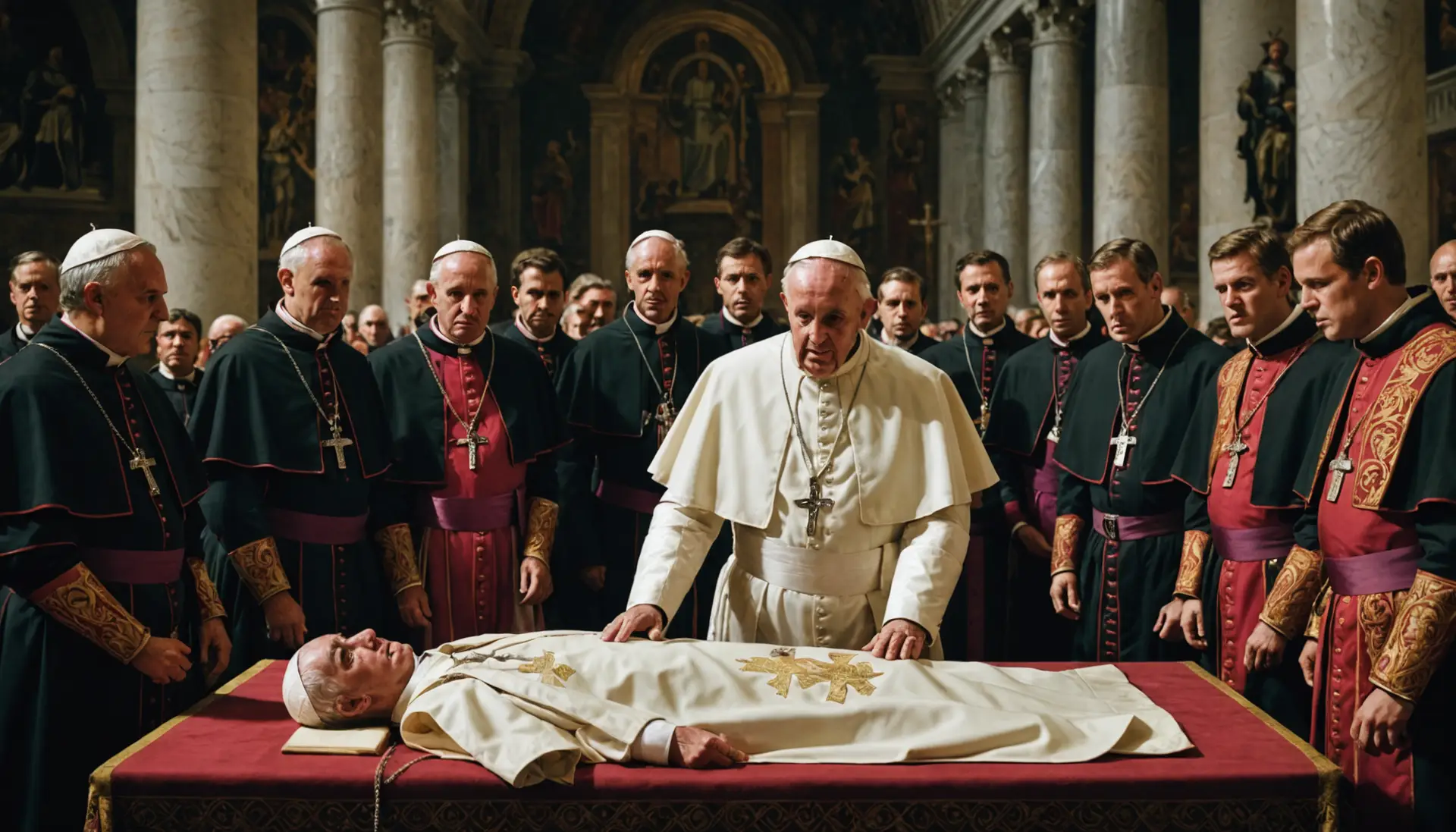
In the dim light of a Roman winter, the air was thick with the scent of damp stone and the faint, lingering odor of decay. It was January 897, and the atmosphere in the papal palace was charged with an unsettling energy. A figure, draped in tattered vestments, sat propped up on a throne, his lifeless eyes staring blankly into the distance. This was no ordinary trial; this was the Cadaver Synod, an event that would etch itself into the annals of history as one of the most bizarre and macabre episodes in the saga of the Catholic Church. The trial of Pope Formosus, conducted posthumously, was not merely a spectacle of grotesque absurdity but a reflection of the turbulent political landscape of medieval Rome, where power struggles and theological disputes intertwined with the very fabric of faith.
To understand the Cadaver Synod, one must first delve into the complex tapestry of medieval papal history. The late ninth century was a time marked by instability and factionalism within the Church. The papacy had become a pawn in a larger game of political intrigue, with various factions vying for control over the Holy See. The power dynamics were further complicated by the influence of noble families, particularly the powerful and ambitious Spoleto dynasty, who sought to manipulate the papacy for their own ends. In this environment, the sanctity of the papal office was often overshadowed by personal vendettas and ambitions. The Church, once a beacon of spiritual authority, had become entangled in a web of corruption and moral decay.
Pope Formosus himself was a controversial figure whose rise to power was fraught with conflict. Elected pope in 891, he had previously served as bishop of Portus and had been embroiled in various political machinations long before his papacy. His tenure was marked by significant ecclesiastical reforms and efforts to strengthen the Church’s authority, but it also drew ire from rival factions. Formosus’s decisions alienated many, leading to accusations of ambition and betrayal. His death in 896 did not bring peace; rather, it ignited a firestorm of controversy that would culminate in the grotesque spectacle of his trial.
The events leading up to the Cadaver Synod were steeped in political intrigue and personal animosity. After Formosus’s death, his successor, Pope Stephen VI, found himself at the center of a power struggle that threatened to engulf the papacy. Stephen was aligned with the Spoleto family, who had their own grievances against Formosus. The new pope sought to delegitimize his predecessor’s papacy, viewing it as a means to consolidate his own power and appease his allies. The decision to exhume Formosus’s body and put it on trial was not merely an act of vengeance; it was a calculated move in a high-stakes game where reputations were at stake and alliances could shift with deadly consequences.
As winter deepened in Rome, the stage was set for an unprecedented event. The trial itself unfolded in a darkened chamber within the Lateran Palace, where flickering candles cast eerie shadows on the walls. The atmosphere was thick with tension as Stephen VI presided over the proceedings, flanked by a motley assembly of clergy and nobles eager to witness this grotesque spectacle. Formosus’s corpse, dressed in papal vestments and propped up on a throne, became an object of both horror and fascination. The sight was enough to send shivers down the spines of those present; here lay a man who had once wielded immense power, now reduced to a lifeless figure subjected to mockery and scorn.
The trial itself was a farce, characterized by absurdity and theatricality rather than legal rigor. Stephen VI accused Formosus of various crimes, including perjury and violating ecclesiastical law during his lifetime. The corpse was defended by a deacon who spoke on its behalf—an act that only deepened the surreal nature of the proceedings. As accusations flew and witnesses were called forth, it became clear that this trial was less about justice and more about settling old scores. The air grew heavy with an unsettling mix of disbelief and morbid curiosity as onlookers grappled with the reality of what they were witnessing.
In the aftermath of the Cadaver Synod, chaos reigned within the Catholic Church. The trial did not achieve its intended purpose; instead, it further divided an already fractured institution. Pope Stephen VI’s actions drew widespread condemnation from both clergy and laity alike. Many viewed the trial as an affront to the dignity of the papacy itself, while others saw it as a reflection of the moral decay that had seeped into the Church’s leadership. The fallout from this bizarre event led to Stephen’s eventual downfall; he was imprisoned and later strangled in a coup orchestrated by those who sought to restore some semblance of order to the papacy.
The legacy of the Cadaver Synod is one marked by confusion and disillusionment. It served as a cautionary tale about the dangers of political ambition within ecclesiastical ranks. The event left an indelible mark on papal authority, prompting subsequent popes to tread carefully in their dealings with rival factions. The synod also raised questions about the nature of authority itself—what does it mean to hold power when that power can be so easily undermined by personal vendettas? In many ways, it foreshadowed future conflicts within the Church that would continue to reverberate through history.
In examining the Cadaver Synod within its broader historical context, one cannot help but draw parallels to other bizarre trials that punctuated medieval Europe. From witch hunts to heresy trials, these events often reflected societal anxieties and power struggles that transcended individual cases. The spectacle of a dead pope on trial echoed themes found in other historical moments where justice became entangled with spectacle—a reminder that human beings have long been drawn to both the macabre and the absurd.
The Cadaver Synod has not only lingered in historical memory but has also found its way into popular culture. Artists and writers have drawn inspiration from this grotesque episode, depicting it in various forms across literature and visual art. The image of Formosus’s corpse propped up in judgment has become emblematic of both ecclesiastical folly and human hubris. In modern interpretations, this event serves as a lens through which contemporary audiences can explore themes of power, morality, and the often-blurred lines between justice and vengeance.
As modern scholars revisit the Cadaver Synod, interpretations continue to evolve. Some view it as an aberration within an otherwise stable institution; others see it as indicative of deeper systemic issues within medieval Christianity. The synod raises questions about how history is remembered and retold—what narratives are constructed around figures like Formosus and Stephen VI? In an age where historical revisionism is prevalent, understanding these events requires grappling with uncertainty and complexity rather than seeking simple answers.
In conclusion, reflecting on the Cadaver Synod reveals much about human nature and our relationship with power. It serves as a haunting reminder that even institutions meant to embody moral authority can succumb to folly and corruption. The echoes of this bizarre trial resonate through time, urging us to consider how ambition can distort even the most sacred spaces. As we navigate our own complexities today, perhaps there is wisdom in remembering that history is not merely a series of events but a tapestry woven from human experience—one that is often as strange as it is profound.