
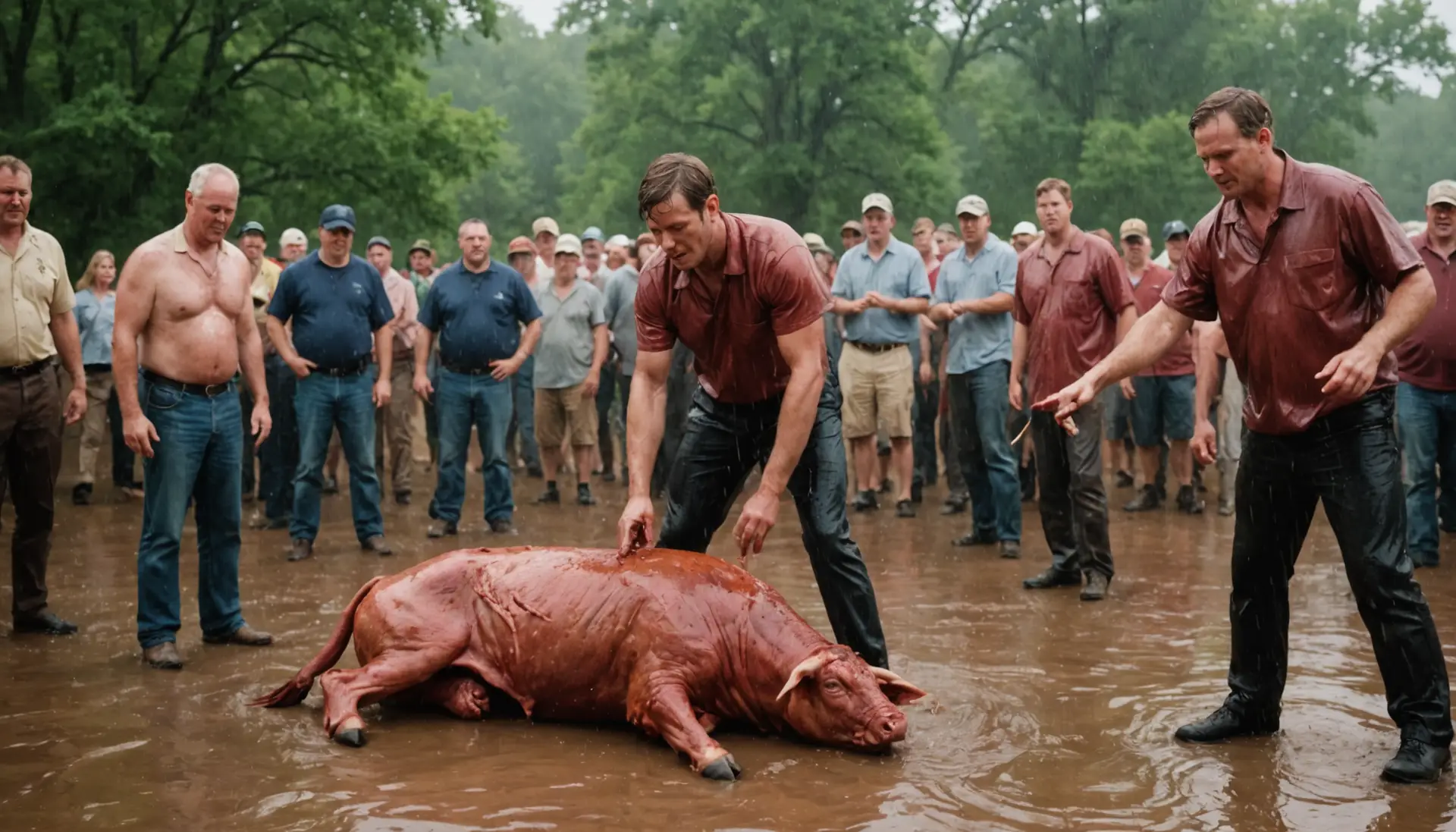
On a chilly afternoon in March 1876, the residents of Bath County, Kentucky, were startled by an event that would etch itself into the annals of the bizarre. As they went about their daily routines, a strange phenomenon unfolded above them. The sky, usually a canvas of blue or gray, transformed into a stage for something inexplicable. Meat—chunks of what appeared to be beef or perhaps mutton—began to fall from the heavens, blanketing the ground in a surreal spectacle. The air was thick with confusion and disbelief as townsfolk rushed outside, their senses assaulted by the sight and smell of this unearthly shower. What could have caused such an occurrence? The answers would elude them for years, leaving behind a legacy steeped in mystery.
The event itself was as perplexing as it was unsettling. Witnesses described the meat as being of various sizes and shapes, some pieces resembling small steaks while others were more akin to shredded bits. The ground was soon littered with these strange offerings, and the scent of raw flesh hung heavily in the air, mingling with the earthy aroma of springtime. It was a peculiar juxtaposition; the promise of renewal that spring brings was overshadowed by this grotesque downpour. As the townspeople gathered to inspect the fallen meat, they were met with a cacophony of opinions and theories. Some believed it to be a divine sign, while others speculated about more earthly explanations. The event was not just a spectacle; it was a moment that would challenge their understanding of nature and reality.
Eyewitness accounts from that day are as varied as they are vivid. One local farmer recounted how he had been tending to his fields when he first heard the sound—a soft thud followed by a series of splats. He looked up, expecting rain, but instead found himself staring at what he could only describe as “a shower of meat.” His heart raced as he rushed to gather his family, urging them to witness this strange phenomenon. Others reported similar experiences, their voices tinged with awe and disbelief. Children laughed and pointed at the sky, while adults stood in stunned silence, grappling with the absurdity of it all. The community was united in their bewilderment, yet divided in their interpretations of what this event meant.
As news of the meat shower spread beyond Bath County, reactions varied widely. Some residents embraced the spectacle with a sense of humor, crafting jokes and stories that would be shared around dinner tables for years to come. Others were more serious, viewing it as an omen or a sign from God. The local church held special services to pray for understanding and guidance, while skeptics dismissed the event as mere folklore or mass hysteria. The media soon caught wind of the story, and it became a topic of fascination across the nation. Newspapers published articles filled with sensational headlines, each vying for attention while attempting to explain the inexplicable.
In the wake of the meat shower, scientists and scholars began to weigh in on the phenomenon. Various theories emerged, ranging from the plausible to the outlandish. Some suggested that vultures had regurgitated their meals mid-flight, causing the meat to rain down upon unsuspecting townsfolk below. Others proposed that a meteorological event had somehow caused animal remains to be lifted into the atmosphere before falling back to earth. Yet another theory posited that it was simply a hoax—a prank played by mischievous locals looking for a laugh. Each explanation had its proponents and detractors, but none could definitively account for what had transpired that day.
To understand the significance of the Kentucky Meat Shower, one must consider the historical context of 1876 in Kentucky. The nation was still reeling from the Civil War, grappling with issues of identity and morality in a rapidly changing landscape. In Kentucky, a state caught between North and South, communities were struggling to rebuild and redefine themselves. The meat shower occurred during a time when superstition and religious fervor were prevalent; many people sought signs in everyday occurrences. In this light, the event took on an even deeper meaning for those who witnessed it—a moment that transcended mere oddity and tapped into their collective psyche.
Media coverage of the meat shower was extensive and varied in tone. Local newspapers reported on it with a mix of incredulity and humor, while larger publications across the country seized upon it as an opportunity to engage readers with sensational stories. Illustrations depicted townsfolk standing in awe beneath falling meat, capturing both the absurdity and gravity of the situation. Editorials debated its implications—was it a sign of divine intervention or simply nature’s capriciousness? The event sparked conversations about faith, science, and the limits of human understanding. For many, it became a symbol of an era marked by uncertainty and curiosity.
In the aftermath of the meat shower, Bath County found itself forever changed. The event became part of local lore, woven into the fabric of community identity. Residents spoke of it with a mix of pride and embarrassment; it was both a source of fascination and a reminder of their vulnerability in the face of nature’s mysteries. Some families even began to capitalize on their newfound notoriety, offering tours or recounting tales to curious visitors eager to hear about the day meat rained from the sky. Yet beneath this veneer of acceptance lay an undercurrent of unease—what other mysteries might lurk just beyond their understanding?
The cultural significance of the Kentucky Meat Shower extends beyond mere curiosity; it has become a touchstone for discussions about folklore and belief systems in American history. The event has inspired countless retellings in literature and art, serving as a metaphor for humanity’s struggle to comprehend the inexplicable. It resonates with themes of faith versus reason, nature versus civilization—a reflection of humanity’s eternal quest for meaning in an often chaotic world. In many ways, it embodies the spirit of inquiry that defines human existence; even in absurdity, there is a desire to seek understanding.
Strange occurrences similar to the Kentucky Meat Shower have been reported throughout history across various cultures and regions. Instances of “raining fish” or “raining frogs” have been documented in places as diverse as England and India, often attributed to unusual weather patterns or natural phenomena. These events share an eerie quality—an unsettling reminder that nature can defy expectations and challenge our perceptions of reality. Each instance invites speculation and wonder, echoing the sentiments felt by those who witnessed meat fall from the sky in Bath County.
In recent years, modern investigations into the Kentucky Meat Shower have sought to shed light on this peculiar event through scientific inquiry and historical analysis. Researchers have combed through newspaper archives and eyewitness accounts, piecing together narratives that reveal not just what happened but how it affected those who lived through it. They have examined meteorological data from that time period to explore potential explanations rooted in atmospheric science. Yet despite these efforts, definitive answers remain elusive; perhaps some mysteries are meant to linger in the shadows.
As time marches on, the legacy of the Kentucky Meat Shower endures—a testament to humanity’s fascination with the strange and inexplicable. It serves as a reminder that even in our modern age, where science often reigns supreme over superstition, there are still moments that defy explanation and challenge our understanding of reality. The event has become part of Bath County’s identity, woven into its history like threads in a tapestry—each story adding depth and richness to an already complex narrative.
In conclusion, the Kentucky Meat Shower stands as an enduring enigma within American folklore—a moment when reality blurred with absurdity and left an indelible mark on those who witnessed it. It invites reflection on our relationship with nature and our quest for understanding amidst uncertainty. As we navigate our own lives filled with questions and mysteries, perhaps we can find solace in knowing that even in moments of chaos, there is beauty in seeking answers—no matter how strange they may be.