
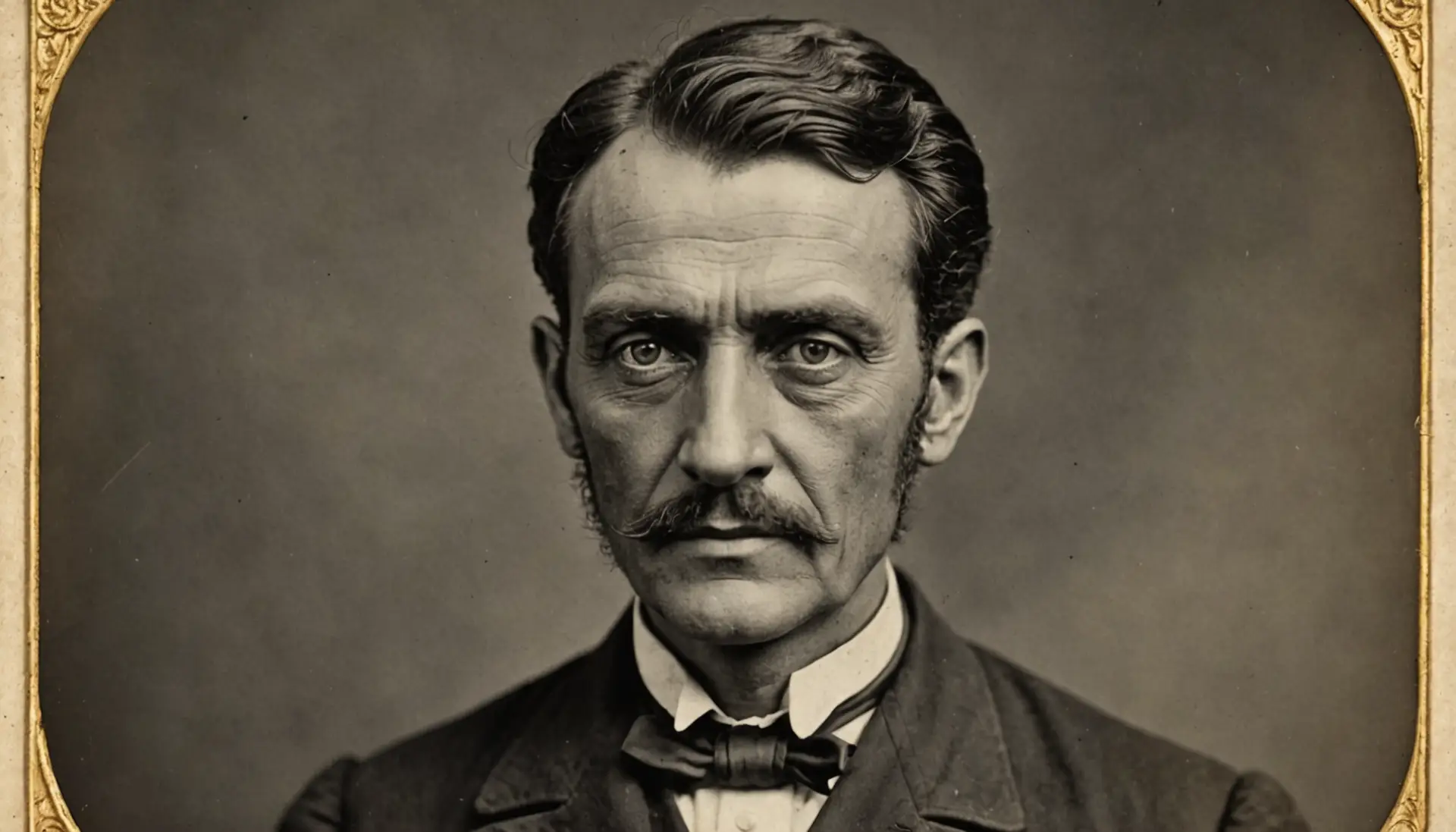
In the late summer of 1944, a peculiar unease settled over the small town of Mattoon, Illinois. The air was thick with the scent of ripening corn, and the sun dipped low in the sky, casting long shadows that danced across the quiet streets. It was during this time that residents began to report a series of bizarre incidents that would soon grip the community in a state of fear and confusion. Whispers of a phantom assailant, dubbed the Mad Gasser, spread like wildfire, igniting a collective anxiety that would linger long after the last reported sighting. The gasser was said to be a shadowy figure who prowled the night, releasing a noxious gas that left victims gasping for breath and clutching their throats in terror. As the days turned into weeks, the town found itself ensnared in a web of paranoia, with each new report feeding into an ever-growing narrative of dread.
The Mad Gasser’s reign of terror began on August 31, 1944, when a woman named Ethel P. awoke in her home to a strange odor that filled her bedroom. Describing it as akin to that of a chemical or perhaps a sweet perfume, she felt an immediate sense of disorientation and panic. Within moments, she was overcome by a wave of nausea and weakness, collapsing onto her bed. This incident marked the beginning of a series of similar attacks that would plague Mattoon over the following weeks. As more residents came forward with their own harrowing tales—each one echoing the last—the town’s atmosphere shifted from one of summer ease to palpable tension. The Mad Gasser had become an unwelcome specter haunting their lives.
Reports of strange symptoms began to surface almost immediately after Ethel’s experience. Victims described feeling dizzy and lightheaded, some even claiming to have experienced temporary paralysis. The symptoms varied but were consistently alarming: headaches, nausea, and an overwhelming sense of dread. One woman recounted how she had been awakened by a strange noise outside her window, only to find herself unable to move as she inhaled the mysterious gas. Another man reported seeing a figure lurking in the shadows before succumbing to a sudden bout of illness. The descriptions were vivid and unsettling, painting a picture of a community under siege by an unseen enemy. As the days passed, the reports continued to flood in, each one more bizarre than the last, creating an atmosphere thick with fear and uncertainty.
The local authorities were quick to respond to the growing panic. Police officers patrolled the streets at night, their flashlights cutting through the darkness in search of any sign of the elusive gasser. Yet despite their efforts, no concrete evidence emerged to substantiate the claims. The lack of physical proof only fueled speculation and fear among residents. Some began to wonder if they were dealing with a real criminal or if something more insidious was at play—a collective hysteria that had taken hold of their small town. The Mad Gasser became a figure of both fascination and dread, embodying the anxieties of a nation still reeling from the effects of World War
As the weeks turned into months, skepticism began to creep into discussions about the Mad Gasser’s existence. Some residents questioned whether the attacks were indeed real or merely figments of an anxious imagination. The media coverage surrounding the events only intensified this debate, with sensational headlines feeding into the growing hysteria. Psychologists and sociologists began to weigh in on the phenomenon, suggesting that what was unfolding in Mattoon could be classified as mass psychogenic illness—a situation where psychological distress manifests as physical symptoms among groups of people. This theory offered a plausible explanation for the strange occurrences, yet it did little to quell the fear that had taken root in the community.
The impact on Mattoon was profound. Families barricaded themselves indoors at night, windows locked tight against an unseen threat. Children were kept close to home, their laughter replaced by whispers of caution and fear. Local businesses suffered as residents avoided venturing out after dark. The once-bustling streets became eerily quiet, punctuated only by the occasional sound of sirens or hushed conversations about the latest sightings. Law enforcement found themselves overwhelmed by calls from frightened citizens reporting suspicious figures or strange odors wafting through their neighborhoods. The Mad Gasser had transformed from an elusive figure into a symbol of anxiety that gripped every corner of Mattoon.
Despite extensive investigations, law enforcement struggled to find any leads that could point them toward a suspect. The lack of concrete evidence left many feeling frustrated and helpless. Officers interviewed witnesses and canvassed neighborhoods but found little more than vague descriptions and unsubstantiated claims. As time passed without any resolution, some residents began to speculate about who—or what—could be behind these attacks. Was it a deranged individual seeking attention? A prankster taking advantage of a tense situation? Or perhaps something more sinister? Theories abounded, but none could provide definitive answers.
As speculation swirled around Mattoon, various theories emerged regarding the identity of the Mad Gasser. Some suggested that he might be a disgruntled local resident seeking revenge against the community for perceived slights or grievances. Others posited that he could be an outsider passing through town, drawn by the chaos he created. A few even entertained more fantastical notions—perhaps he was an alien or a government experiment gone awry. Each theory seemed to gain traction in tandem with the growing hysteria, feeding into an ever-expanding narrative that blurred the lines between reality and fiction.
The phenomenon of urban legends is not unique to Mattoon; similar cases have emerged across different cultures and time periods. From phantom attackers in small towns to mysterious creatures lurking in urban shadows, these stories often reflect deeper societal fears and anxieties. The Mad Gasser’s tale fits neatly into this tradition—an embodiment of post-war unease and uncertainty that resonated with many Americans during that tumultuous time. As stories spread beyond Mattoon’s borders, they took on lives of their own, morphing into cautionary tales that warned against the dangers lurking just beyond one’s doorstep.
The legacy of the Mad Gasser endures in various forms today—an eerie reminder of how fear can shape communities and alter perceptions of safety. While many have dismissed the events as mere hysteria or mass delusion, others continue to explore what happened in Mattoon during those fateful weeks in 1944. The story serves as a case study for psychologists and sociologists alike, illustrating how collective fears can manifest in tangible ways and how communities can become ensnared in cycles of anxiety and paranoia.
In examining the psychological and sociological aspects of this panic, one cannot help but consider how external factors may have contributed to the atmosphere of fear in Mattoon. The backdrop of World War II loomed large over American society at that time; uncertainty about the future permeated daily life. Economic struggles and social upheaval created fertile ground for anxiety to take root. In this context, it is perhaps not surprising that residents would latch onto an external threat—an embodiment of their fears—rather than confront the more complex realities they faced in their everyday lives.
As autumn approached and leaves began to fall from trees lining Mattoon’s streets, reports of the Mad Gasser dwindled until they eventually ceased altogether. The town slowly returned to its routine, but echoes of those summer nights lingered in conversations and memories long after the last gasping victim had been reported. The Mad Gasser faded into obscurity—a ghostly figure haunting history books rather than streets—but his story remains a testament to how fear can grip even the most ordinary places and transform them into landscapes of dread and uncertainty.